

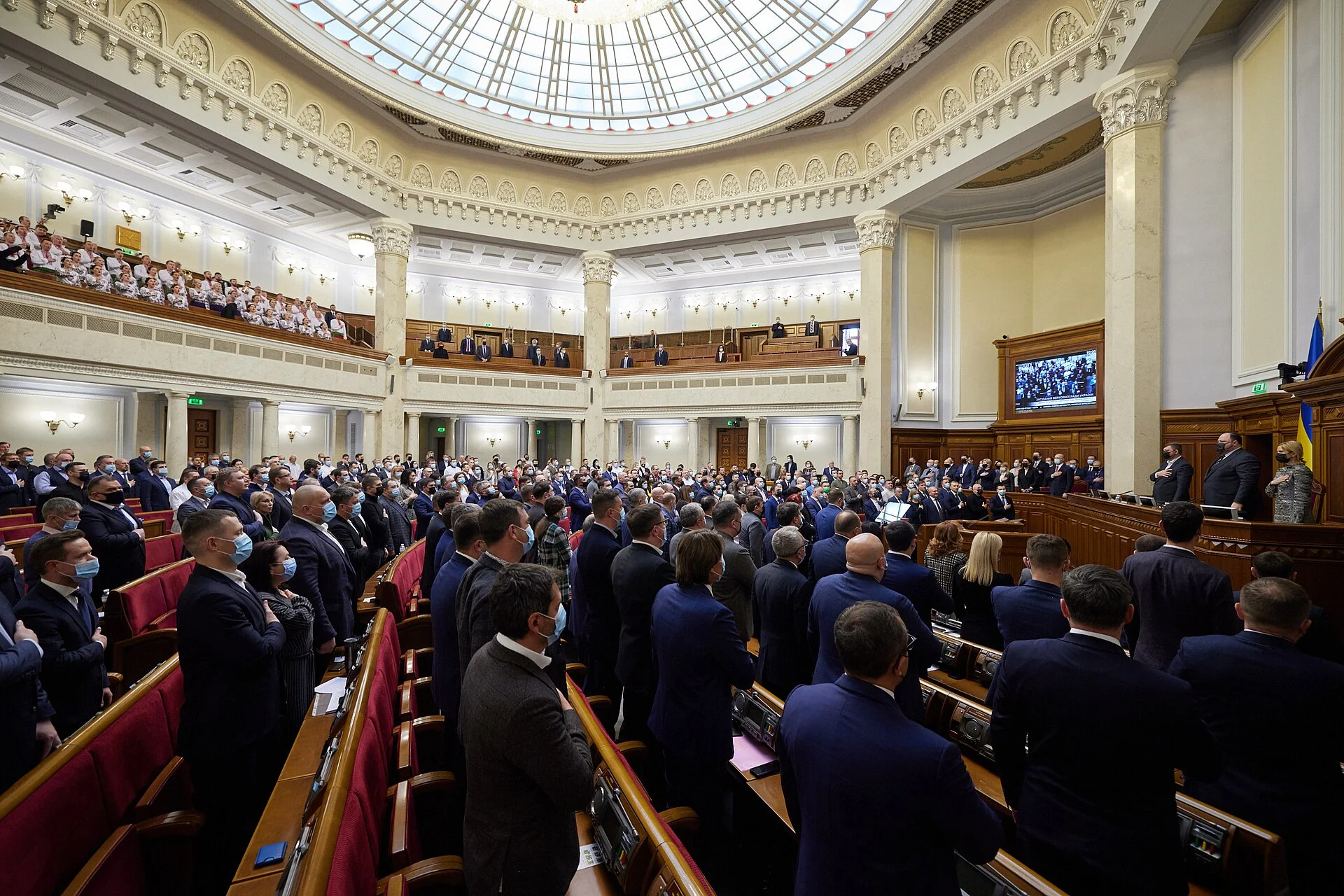
Ukraine’s parliament is preparing a second reading on a criminal-code bill that would end criminal liability for pornography produced by and sold to consenting adults, while raising the penalties for material involving children. Its backers argue the change would also bring an untaxed industry onto the books at a moment when the country needs the money.
The bill, registered as No. 15294, passed its first reading on 14 July. Its official title is not about legalisation at all: the Verkhovna Rada lists it as a law “on amendments to the Criminal Code of Ukraine regarding strengthening liability for the production and distribution of child pornography.”
What the bill actually does
In its own announcement, the Rada said the purpose is to strengthen the protection of children and minors by increasing liability for drawing them into sexual services, distributing pornographic material among them, and involving them in prostitution. It said the bill also improves provisions dealing with the production and sale of pornographic material among adults.
The changes run across Articles 301 to 303 of Ukraine’s Criminal Code. On the child-protection side, the Rada listed tougher penalties for selling or distributing pornographic material to minors, for accessing, acquiring, storing, moving, producing or distributing child sexual abuse material, for staging sexual performances involving a child, for running brothels involving minors, and for pimping or drawing a minor into prostitution.
Separately, the same bill proposes to decriminalise the import, storage, transport, production, sending, sale and distribution of pornographic material where adults are concerned.
The money argument
The war-financing case for the bill comes from the reporting of The Wall Street Journal, which published an account of the industry and the legislation on Sunday. According to that report, Yaroslav Zhelezniak, one of the bill’s co-authors, estimated legalisation could leave up to $25 million in tax revenue available to Ukraine, which he put at roughly 30,000 drones.
Producing, possessing or distributing pornography currently carries a sentence of up to seven years in Ukraine. The Journal reported that authorities have begun pursuing tax from adult content creators, which puts them in an impossible position: paying tax is an admission of criminal conduct.
“These women either don’t pay taxes and face criminal charges for that, or they pay taxes and get charged with violating pornography laws,” Zhelezniak told the Journal. “It’s a tragicomic situation.”
The Journal reported that OnlyFans’ parent company, Fenix International, found 7,900 Ukrainians earned more than $131 million on the platform in 2023, and that a petition filed by one content creator whose home was searched drew more than 25,000 signatures in a week, after which President Volodymyr Zelensky said he would have parliament take up the legislation.
A second attempt
This is not the first run at the change. A broader bill on offences against public order and morality, No. 12191, failed in the Rada on 28 May, drawing 207 votes when 226 were needed. Bill 15294 was registered on 3 June, days after that defeat, by a group of five MPs including Zhelezniak and Danylo Hetmantsev, who chairs parliament’s finance, tax and customs policy committee. It carried on 14 July with 231 votes.
The parliamentary record lists the bill as being prepared for a second reading, and it was placed on the agenda on 1 September. No date for that vote has been set.
This story is built on the Verkhovna Rada’s own account of the bill and on the parliamentary record for No. 15294, both read directly. The material on tax enforcement, the revenue estimate and the individual cases is reporting by The Wall Street Journal, reached through the Jerusalem Post’s write-up of it, and is attributed above rather than confirmed independently by TDot News.
Source: Verkhovna Rada of Ukraine, press service announcement on bill No. 15294, 14 July 2026.